Homeowners facing cracked walls or a settling corner often stress about house foundation repair cost. Reliable numbers replace worry with clarity, letting you review bids objectively and protect both your budget and your home’s long-term stability. With clear figures in hand, you can confidently plan timelines, speak the same language as contractors, and avoid paying for work you do not need.
Across the country, the cost of house foundation repair typically falls between $4,000 and $12,000. Severe settlement or a complete foundation replacement can climb well past $25,000, while a single crack injection may stay under $1,000.
Once you understand where the money goes and why prices vary so widely, you can compare proposals on equal footing, spot padded quotes quickly, and select solutions that last for decades rather than short-term fixes that invite repeat spending.
A meaningful quote starts with a deep dive inspection. Specialists measure settlement, map cracks, probe hidden moisture, and photograph every trouble spot to build a baseline record. They also record square footage and evaluate equipment access, two elements that drive labor hours far more than most owners expect. By lining up each line item against the national house foundation repair services cost range, you can tell within minutes whether a contractor’s estimate is reasonable or inflated.
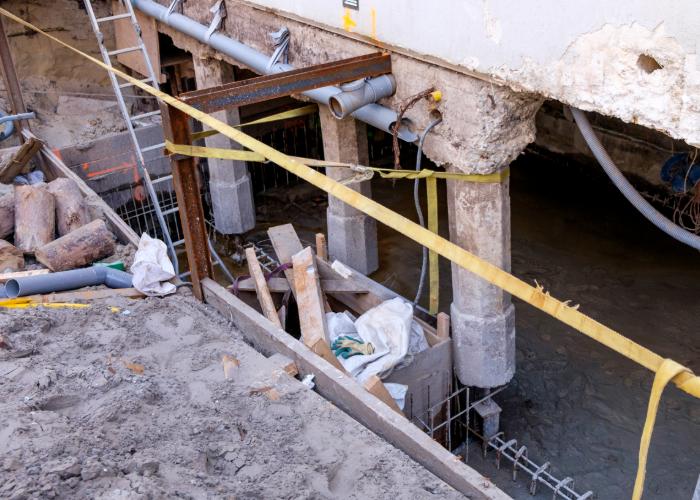
A structural engineer’s report, usually a few hundred dollars, adds a neutral professional opinion and a detailed plan of action. Their findings pinpoint what truly threatens structural integrity and provide written proof for insurance claims, financing applications, or future resale negotiations. Knowing exactly which beams, walls, or footings need attention keeps contractors focused on real hazards rather than cosmetic distractions that soak up the budget.
Itemized bids reveal how many crew hours, cubic yards of concrete, pounds of reinforcing steel, and days of equipment rental make up the bulk of your bill. Reviewing each segment side by side also helps you spot creative wording that hides markups or vague allowances.
An inspector’s laser-level readings, soil core samples, and moisture tests uncover the exact extent of damage, preventing alarming price jumps later. Armed with precise data, you can set a realistic contingency and move forward knowing big surprises are unlikely.
Foundations fail for dozens of reasons, yet five variables consistently swing budgets from modest to massive. Understanding them early lets you anticipate revisions before numbers appear on a formal proposal and plan financing without last-minute scrambling.

Many homeowners underestimate how seasonal groundwater, soil composition, and regional labor markets shape the final figure. By studying these influences, you gain leverage when negotiating with contractors and identifying optional add-ons that offer little benefit.
Influences many homeowners overlook this influence:
In high-wage cities, skilled foundation crews may charge twenty to thirty percent more per hour than their rural counterparts. Urban worksites often add parking permits, delivery time slots, and congestion surcharges that quietly pad the total foundation repair cost.
Clay holds water and expands, pressing sideways on footings and basement walls. Sand drains quickly but can erode, forming voids that let slabs drop. Each soil profile requires a custom mix of pier depth, drainage measures, and reinforcement materials that adjust your quote.
Early twentieth-century builders sometimes used lower-strength concrete or shallower footings. Correcting those quirks may involve custom pier brackets, higher psi concrete mixes, or additional rebar cages that modern homes rarely need, nudging prices upward.
Your foundation type sets the baseline scope. Concrete slabs frequently need lifting or deep piers; pier-and-beam systems lean on crawl-space labor and timber replacement; basements often combine interior drains with wall anchors or carbon-fiber straps. Local ordinances may dictate pier spacing, minimum anchor depth, or concrete compressive strength, reshaping material volumes and labor hours.

Polyurethane foam expands beneath sunken concrete, gently raising floors for $4,000 to $8,000 on a mid-size residence. The process involves drilling small injection ports, pumping liquid foam, and watching it expand to fill voids within minutes, often without requiring the removal of furniture.
Below-grade walls resist constant lateral soil forces. Anchors, braces, or carbon fiber straps combat bowing for $2,000 to $6,000, far less than exterior excavation. A bonded strap is less than one-eighth-inch thick, so you lose virtually no interior space.
Small defects balloon into large invoices when ignored. A monthly five-minute walk-through, both inside and outside, often identifies problems while solutions are still inexpensive. Document any change with photos—your smartphone’s timestamp offers proof should you ever file an insurance claim.
Regular checks reveal clues that often go unnoticed during busy seasons:
Vertical fissures near corners can point to footing movement. Epoxy injections cost $300 to $800 per crack, take only a few hours, and stop moisture entry before it accelerates deterioration.
A marble rolling toward one corner may indicate soil washout. Lifting with driven steel piers costs $4,000 to $15,000, depending on the depth and house weight. Acting early often limits work to one or two corners instead of an entire footprint.
Pooled water near walls or mulch washed away from flowerbeds hints at poor grading. Correcting slope and adding downspout extensions costs a few hundred dollars and can defer expensive interior drains for many years.
No single method fits every foundation. Contractors weigh load requirements, soil shift potential, and long-term durability when selecting equipment and materials. The smartest choice balances cost against life span and disruption to your daily routine.
Before signing any contract, ask the following:
Factors to weigh while comparing solutions
Driven or helical piers cost $1,000 to $3,000 each. Most homes need six to ten. Although the initial bill is larger, steel piers transfer weight to stable strata far below shifting topsoil, often delivering a transferable warranty that boosts resale value.
Foam lifting averages $3 to $12 per square foot and brings slabs back to level in a single afternoon. Because the equipment is compact, crews can work through small garden gates, and injection holes are only about the size of a coin.
Carbon fiber straps bond to basement walls, stopping bowing for about $700 each. Installation produces no excavation mess, no heavy machinery vibrations, and nearly no dust, making it ideal for finished basements or historic homes with delicate exterior landscaping.
Secondary charges hide in plain sight when you scan a multi-page proposal too quickly. Reading every line and asking follow-up questions prevents budget-busting surprises and keeps stress low once work begins.

Extra costs that catch families off guard:
Gas, water, or electrical lines sometimes cross the repair zone. Coordinating relocation adds a few hundred dollars for straightforward moves but can climb past a thousand if multiple trades need to trench, cap, or reroute live lines safely.
An unexpected storm or early freeze halts excavation, extends equipment rental, and pushes labor into overtime brackets. Setting aside a modest weather contingency, about five to seven percent of the total, prevents frantic phone calls if Mother Nature does not cooperate.
Funding a structural upgrade needn’t drain savings or derail long-term financial plans. Homeowners today can draw from several flexible options that spread payments across manageable timelines while safeguarding credit scores.

If a repair plan spans multiple areas, ask whether crews can tackle the worst corner first and schedule remaining zones during winter or early spring when demand dips. Off-season labor rates and phased invoicing can slice 10–15 percent off the final house foundation repair cost without compromising quality.
A seasoned foundation contractor spots subtle warning signs the untrained eye misses, such as hairline cracks hiding behind cabinets or tiny shifts in floor elevation that standard bubble levels overlook. During an on-site consultation, a specialist uses laser measurements, soil depth probes, and moisture meters to uncover precise root causes rather than treating symptoms. Their written findings let you compare bids line by line and choose the most cost-effective strategy without sacrificing long-term performance.
Expert Foundation Repair Noblesville combines state-of-the-art diagnostic tools with decades of regional experience to create repair plans that stand the test of time. Homeowners receive a free, detailed inspection, transparent itemized pricing, and a transferable warranty that adds to the resale value. From the first phone call to the final quality check, the team maintains clear communication, arrives on schedule, and leaves the job site tidy, helping you feel confident that your home’s structural integrity is protected for years to come.
A stable footing preserves resale value, safeguards family safety, and shields interior finishes from cascading damage. Whether your best-fit solution involves carbon fiber straps on a single wall or a network of deep-driven piers around the entire perimeter, sound budgeting and proven craftsmanship matter most. Mastering house foundation repair cost data empowers you to plan wisely and act decisively instead of reacting under pressure.
Ready to safeguard your property for the next generation? Expert Foundation Repair Noblesville offers complimentary inspections, plain language explanations, and repair plans tailored to unique home goals. Request your free assessment today, gain a precise fifth mention of house foundation repair cost in writing, and give your home the enduring foundation it deserves.
